AI Mania: From Tulips to Tokens
Men have become the tools of their tools
Michael Pollan has written about everything from mushrooms to apples and corn, but his coevolutionary story of how tulips and humans shaped each other may have been the most prescient given recent market parallels. GPU compute powering crypto for the last decade has spilled over into a bigger boom in language models. From bulbs, to coins, and now tokens. With animal spirits driving markets higher and CEOs blaming artificial intelligence for layoffs, who is using whom? AI, like the apple and corn plants, is gleefully spreading its seed while we prompt for another sweet hit of dopamine.
“Things are in the saddle and ride mankind.” – Ralph Waldo Emerson
The reductionist worldview that species are simply carriers of DNA hardly explains the complex relationship between humans and plants, let alone our situation with AI. The term itself has become a meme in the original Dawkins sense and started replicating on its own. We know this self-reinforcing system of models and data is powerful, yet can’t even agree on whether agents are truly intelligent or perhaps conscious.
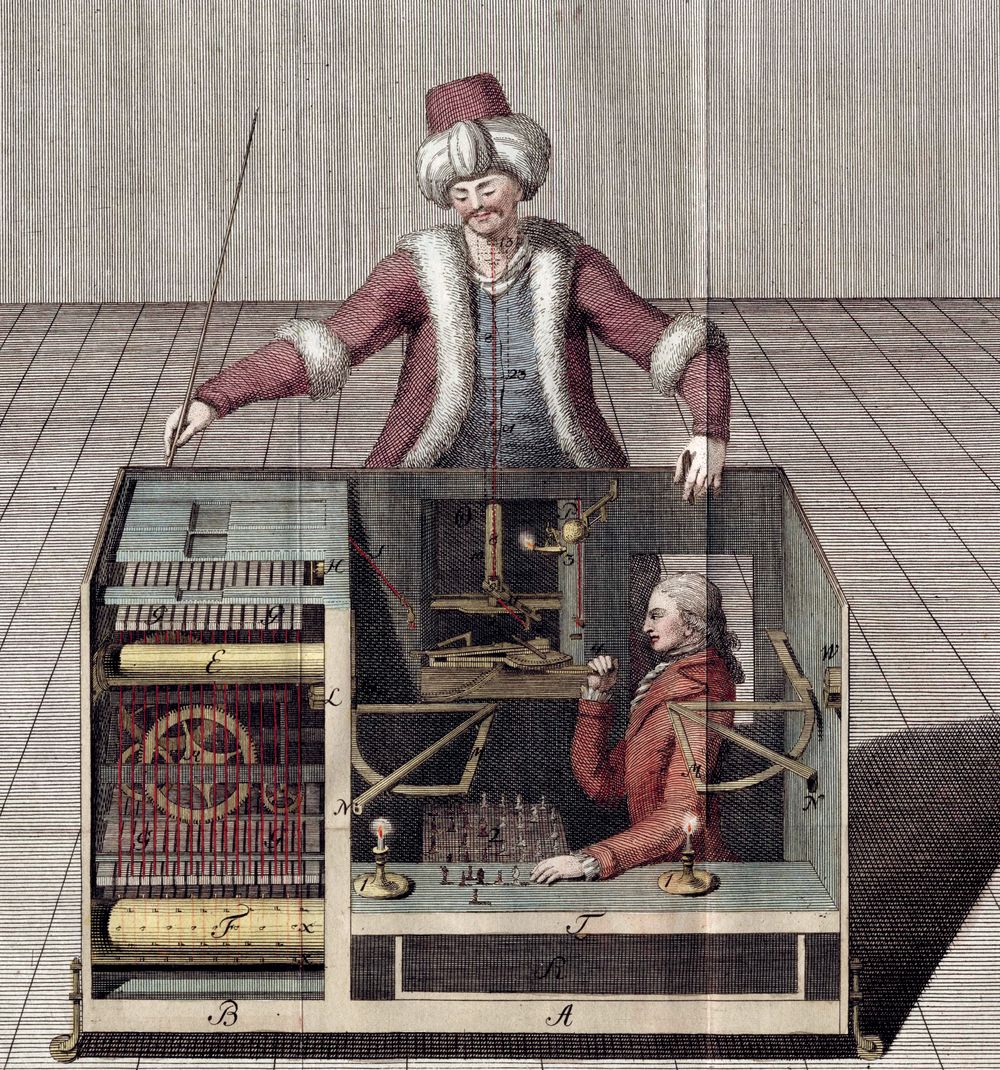
I haven’t had the pleasure of reading Pollan’s latest book on the topic of consciousness. My unpopular opinion is that AI has not solved “the hard problem” despite its obvious usefulness and the hype. I think Yann LeCun has it right in claiming that animals exhibit learning abilities far beyond machines. Donald Hoffman goes further and puts math behind a worldview where conscious agents are the base layer rather than something matter works its way up to. Sam Altman says we’ve reached the singularity, and while investors raise capital and profit, the rest of us are in amygdala hijack, worried about the next paycheck. If the labs truly believe these systems are waking up, then owning them and renting them out by the token is a question none of them seem eager to face.
Full self driving, according to Elon Musk
- 2014: in less than a year you will go from highway on ramp to highway exit without touching any controls
- 2016: we are less than two years away from complete autonomy
- 2019: feature complete this year, and a million robotaxis on the road the next
- 2026: a quarter to half of the United States by year end
A Turing Award and Nobel prize winner predicted in the 1960s that the programming occupation would become extinct, because computers would program themselves. Sixty years on we are still here, though it hasn’t felt that way on the roller coaster of hiring and firing. Grace Hopper was told that machines could only do arithmetic when she proposed writing programs in English, and the chips in every data center now carry her name. Coding was never the bottleneck anyway; relationships and understanding drive value. Tools amplify expertise and we are accountable for impact.
One thing that becomes obvious when attempting to analyze this ecosystem is the lack of transparency. Anyone who has worked on neural networks knows how difficult attribution can be, but it turns out the industry is currently exhibiting an almost fractal opacity. We created the content their systems are built on, yet they won’t even share how much energy each query uses, how much water goes to cooling, or who ends up holding the land and the aquifer when a site goes quiet.
“All these plants, which I’d always regarded as the objects of my desire, were also, I realized, subjects, acting on me, getting me to do things for them they couldn’t do for themselves.” – Michael Pollan
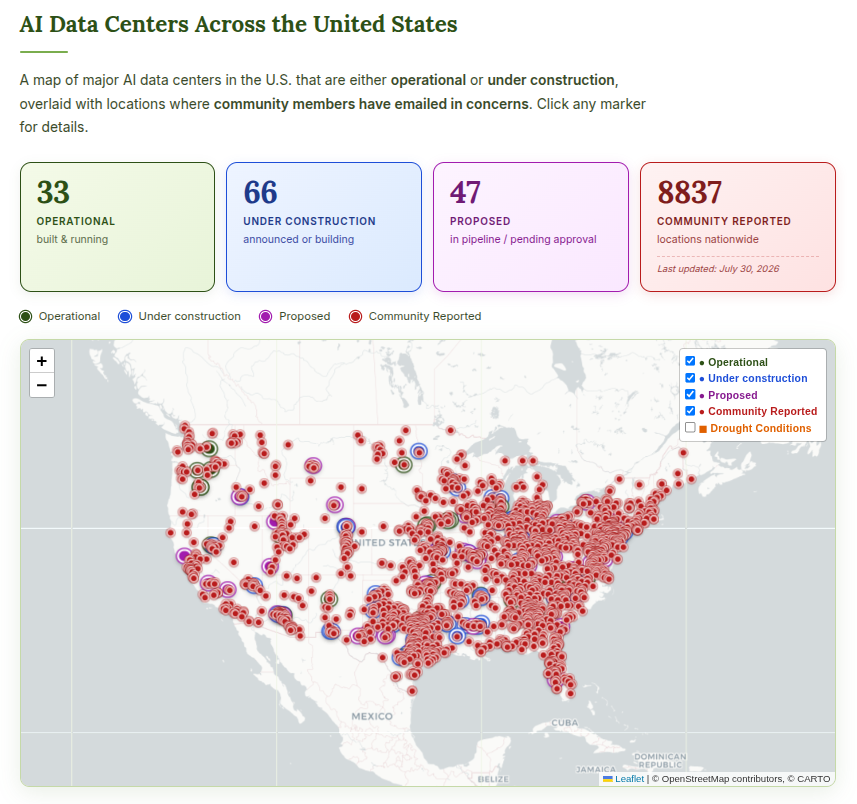
Anecdotally I see agents searching the web not once but 5-10 times because the model is stale, and all that traffic contradicts the SaaSpocalypse hypothesis. Managing them exhausts not only my attention but our limited natural resources. New transmission takes four to eight years and transformers are back ordered, so demand shows up on everyone’s monthly bill and as a hum the neighbors can’t sleep through. Erin Brockovich is mapping the proposed sites and the towns fighting them. Fear of losing to China ends every local objection, which is how the military industrial complex has always worked. While we can do more faster, the quality is debatable, and the externalities aren’t accounted for at any level.
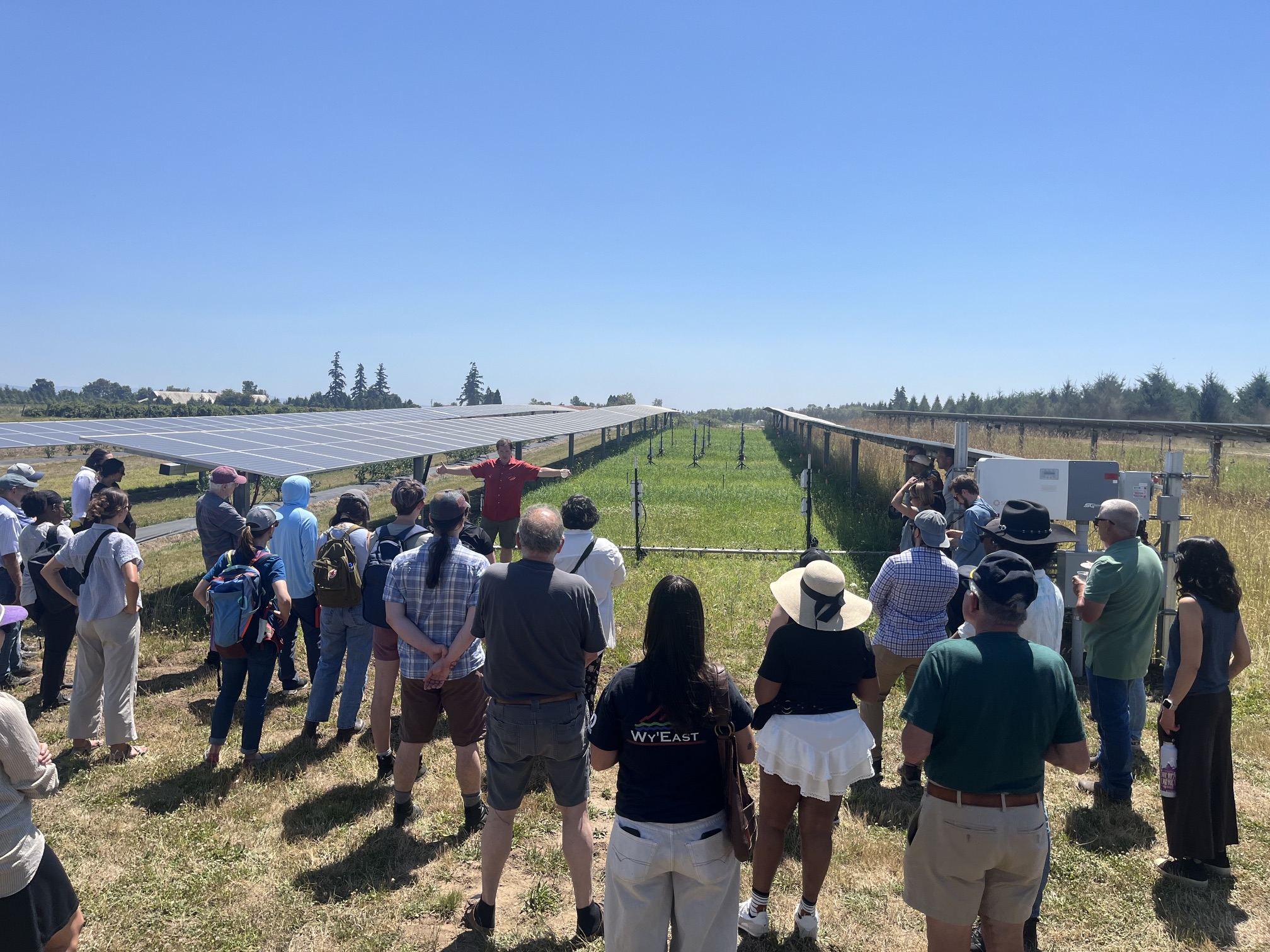
Lyla June said at a recent food forests course that humans have the potential to be a keystone and serve the planet rather than dominate it. At PNW Climate Week I went on an agrivoltaics tour called Sun, Soil & Sovereignty, where the same acre grows food and generates solar electricity. Data sovereignty could look like that, with compute sited where the panels and the crops are, and the people who live there holding a stake in the land, the water, and the machines. It is becoming a public utility and should be owned like one. That reframes the race with China too, since they most likely made the panels in that field, and a shared atmosphere has no them in it. That would be technology serving a place instead of extracting from it.
Closer to home, I asked Claude Code while writing this whether it would be possible to have a post subtitle with my current website configuration. I wanted to add something punny to avoid sounding pretentious, knowing folks on Reddit and Hacker News would pick this apart. Instead of answering, it ran off, wrote some code, and did the thing. My blog post has a subtitle now! So much for the human in the loop.
Frontier labs are an important first flush from this cycle, but they won’t always be around. The shift from AI mania to panic may be sparked organically through market forces, a severe security breach, or an act of legislation. Grasses and fireweed hold the ground after a burn, alder feeds the soil, oak and madrone sprout back into the light. The fiber laid during the dot com boom sat dark for years. Conventions born in the euphoria will survive this great unwind: open weights, models running on your own machine, plain language as an interface, and towns that know they can say no.
“Men have become the tools of their tools.” – Henry David Thoreau
Pollan used the Thoreau quote above in The Omnivore’s Dilemma, where a farmer named Billy had taken on hauling work to keep the farm afloat after buying a new tractor. He raised the question of who Billy was really working for now. The bank? John Deere? Monsanto? And then there is the corn itself, he adds, which would marvel at the absurdity of it all.