PNW Climate Week
I came to PNW Climate Week curious how I could better serve the planet. That might mean using my software skills to power an organization focused on environmental impact, conservation, or clean energy. It could also look completely different, part of a more conscious lifestyle spent tending community gardens or helping in ways I have yet to dream up. There are a lot of possibilities!
Day 1
The week kicked off with a full day of panels and workshops around “Empowering Local Climate Action: Education, Policy and Practice”, opening with a guided visualization to imagine 2035 through each of our senses. We crowdsourced what we noticed onto paper, and graphic recorder Molly Chidsey drew our collective vision from those notes here:
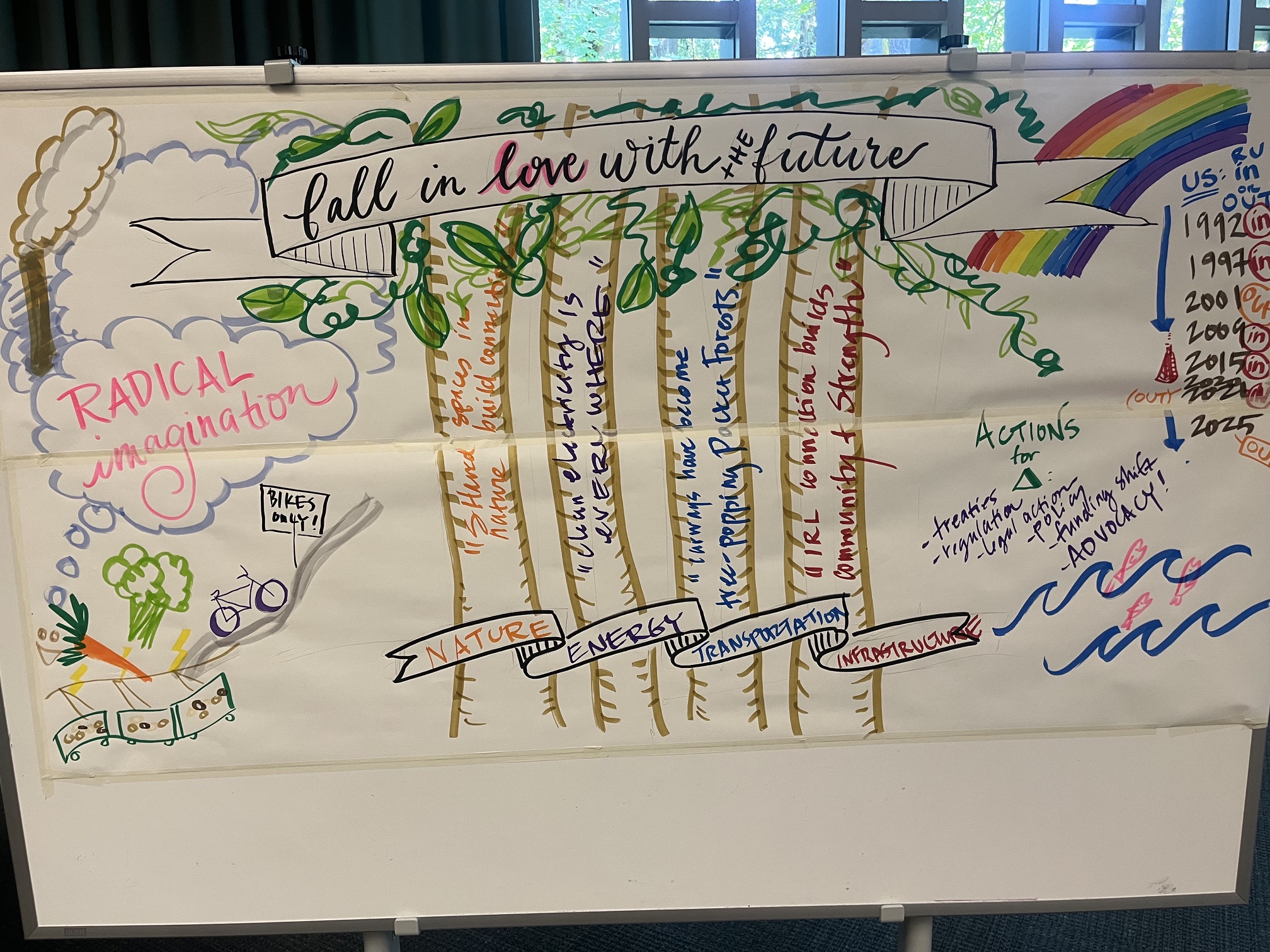
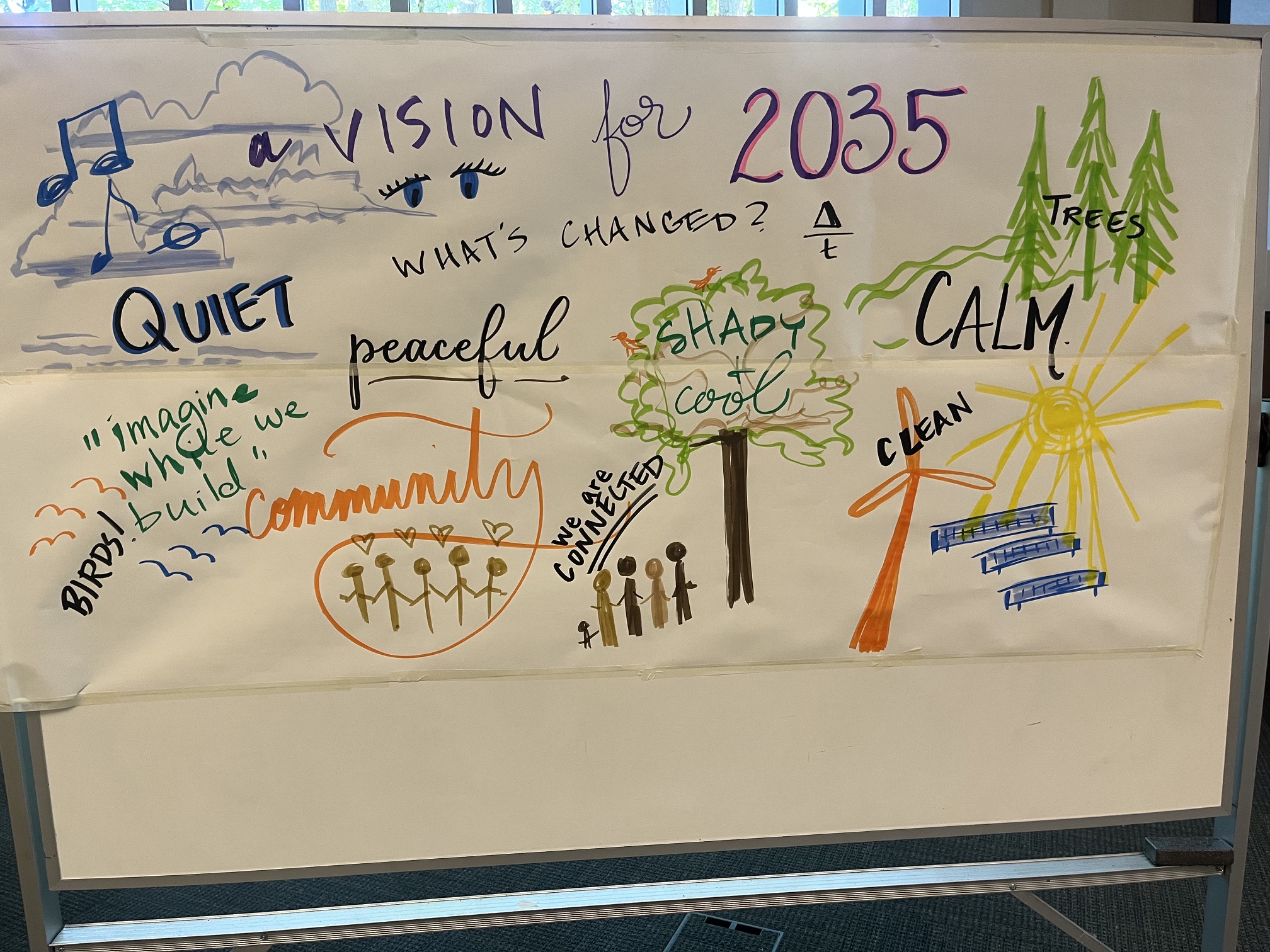
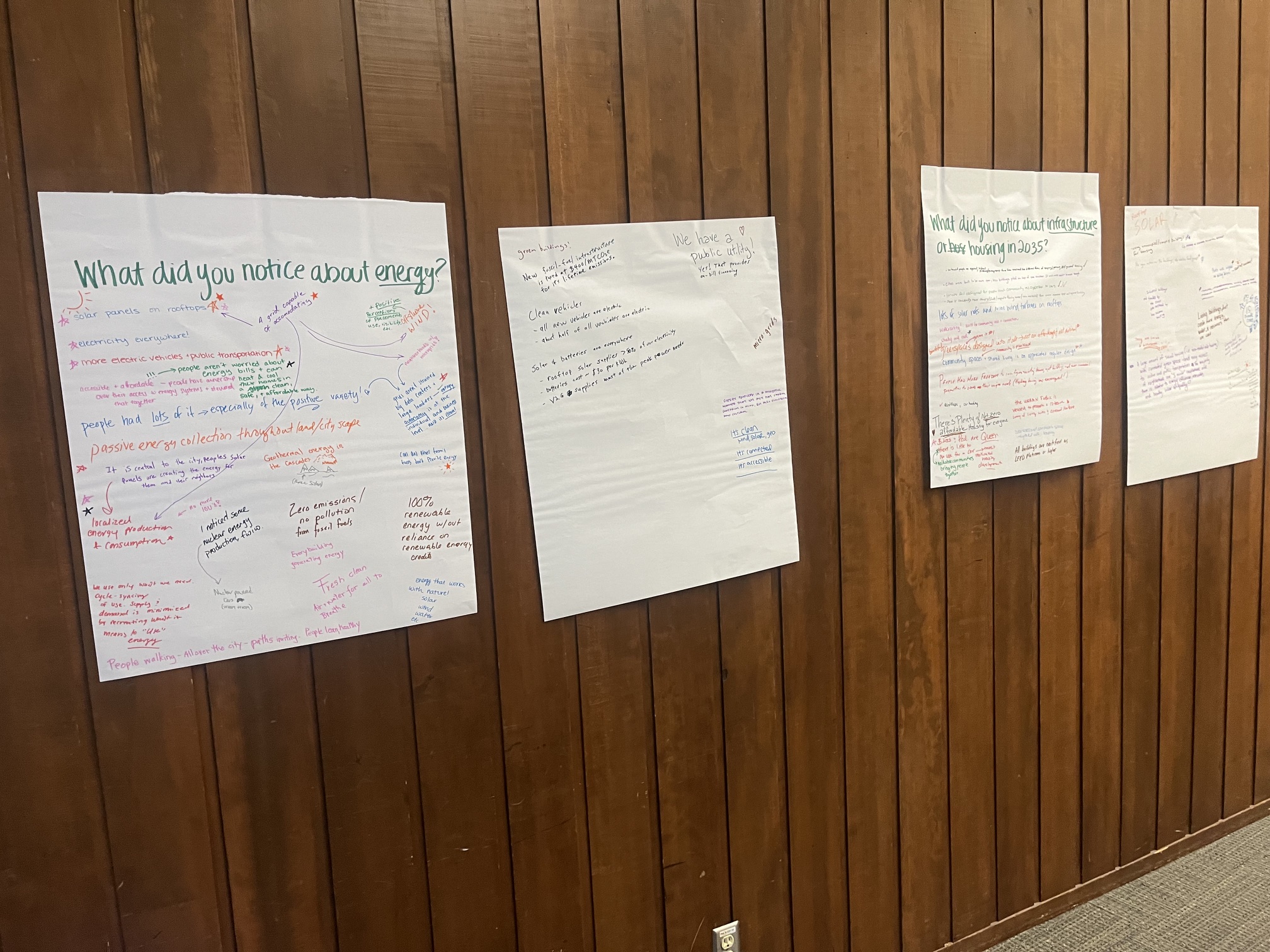
I was happy to connect with Renee Rutz, who handles communications for the Oregon Climate Action Hub, an amazing resource to help Oregonians find ways to get involved. I also shared lunch with some great folks including panelist Sherrie Villmark, Program Director at Community Energy Project, where they weatherize homes and bring community solar to low income households. I loved her response when I told her about my work building software for foster families: “the best way to help children is by helping the planet!”
Later that evening I went over to Sunnyside Community Center and experienced conservation at the Minam River Wildlife Area through a VR headset before viewing Other Side of the Hill, thanks to another rad local org, NW Documentary. The film amplifies rural community leaders in Eastern Oregon finding hope in a changing landscape, with a filmmaker Q&A after. Data centers came up here and again on the farm tour the next day, as a potential buyer for farmers who have trouble selling power back to the utilities.
Day 2
Sun, Soil & Sovereignty was an agrivoltaics tour with SHEBA Farm at Oregon State’s North Willamette Research and Extension Center in Aurora, where the same acre grows food and generates power. Under the tent, Farm Solar Fit walked through the system they are building for Oregon and Washington farmers. It weighs three options over a 20 year horizon: keep farming as is, lease the land for solar, or go agrivoltaic. The math runs on the actual soil, sun, and water numbers for a parcel instead of generic estimates.
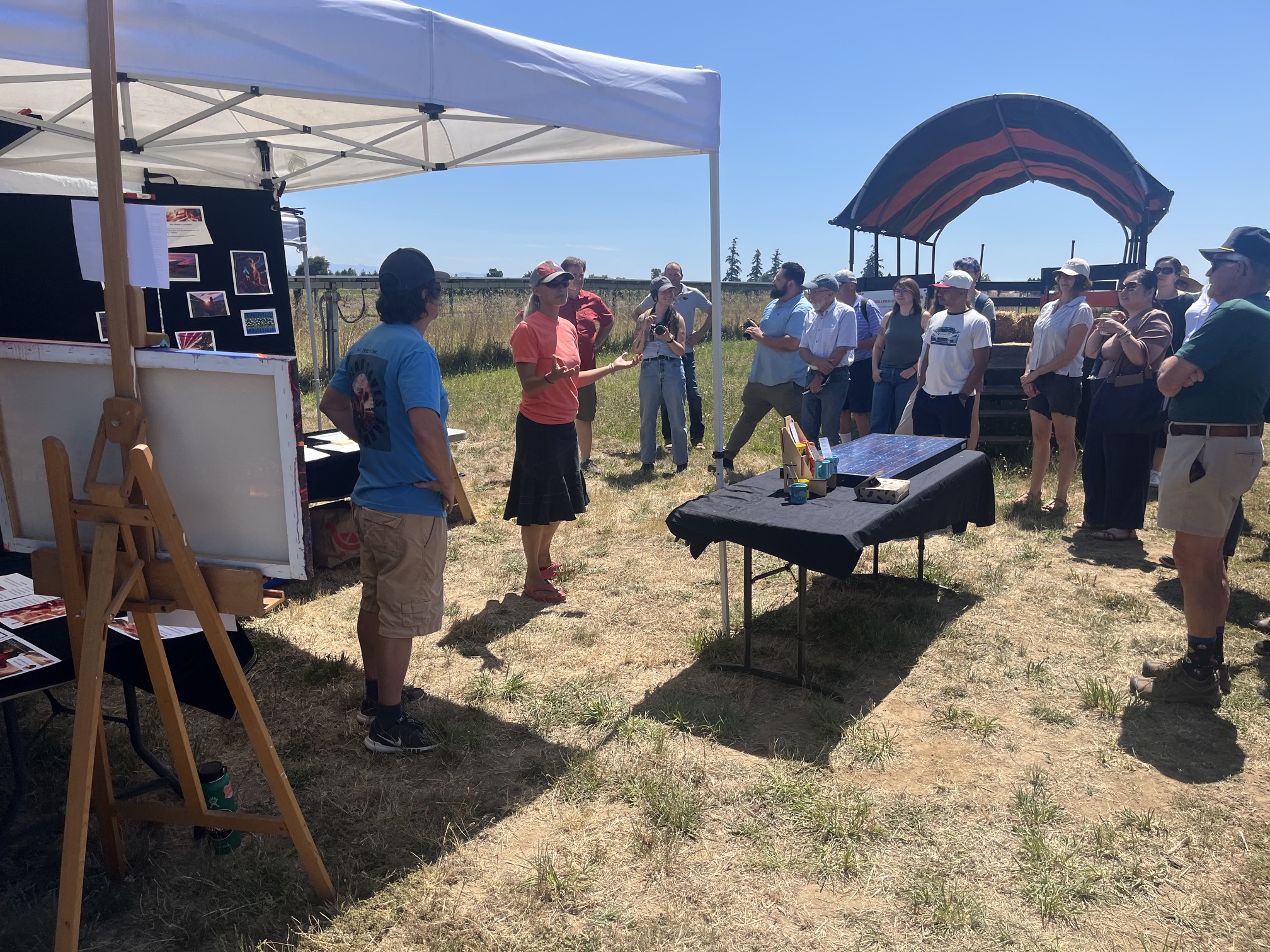
OSU professor Chad Higgins reframed sunlight as something fungible because panels enable farmers to create surplus power. C3 and C4 plants differ in how they convert photons, so every crop has its own saturation point. Shade from the panels cuts water demand and heat stress, and because plants grow in degree days, you can even manage the bloom calendar. Oregon happens to sit at the perfect latitude where this practice helps both the plants and the economics. The golden rule is don’t block the row, and stringing cables across the front is one of the easiest ways to break it!
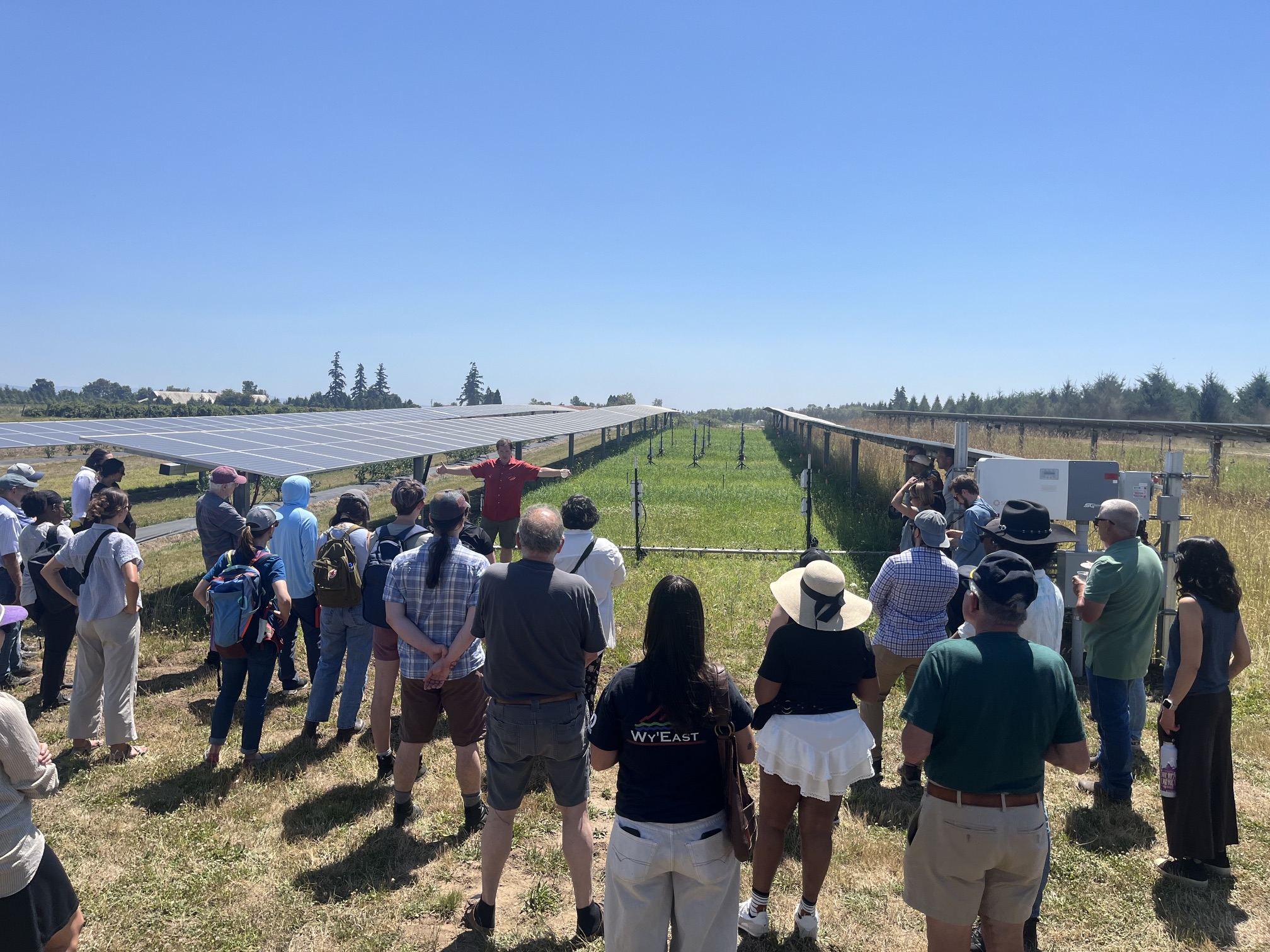
Itanna Murphy and Dr. Ardelia Clarke could not have been more welcoming. Itanna leads SHEBA Farm, activating 10 acres of underutilized Willamette Valley farmland for beginning and underrepresented farmers. Dr. Clarke, also from SHEBA, runs Nerd’N Out, which brings PhD level rigor to frontline communities and tribal nations who rarely get access to it. Jana Gastellum came out for the tour her org sponsored, as Executive Director of the Oregon Environmental Council.
Women in Cleantech and Sustainability and Future Climate Collective put on a screening of Future Council, a doc about kids taking on corporate and political leaders over climate accountability. Afterward, Portland’s Chief Sustainability Officer Vivian Satterfield moderated a youth panel with Sage Dalke from the Collective, Shubh Narayan from the city’s Sustainability and Climate Commission, and Twyla Metcalfe, an environmental studies major at Lewis & Clark.
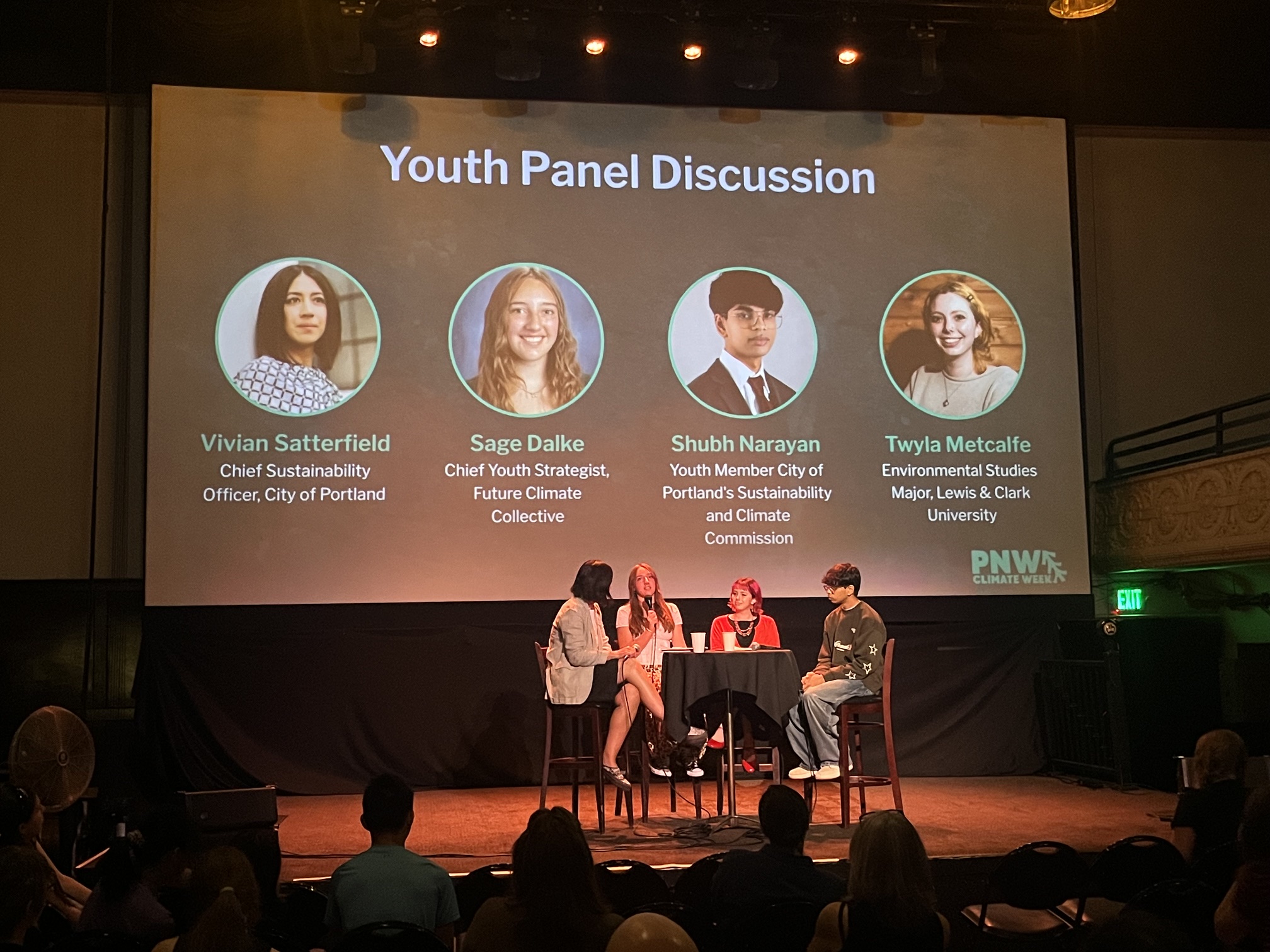
Erin Kester, who was volunteering that night, was so friendly and went out of her way to make me feel at home. It turns out she worked on the big wind farm offshore of Humboldt, where I live now, and we had been neighbors of a sort long before we ever met. Erin leads external affairs at esVolta, building utility scale battery storage, after 15 years shaping energy policy across the West.
Day 3
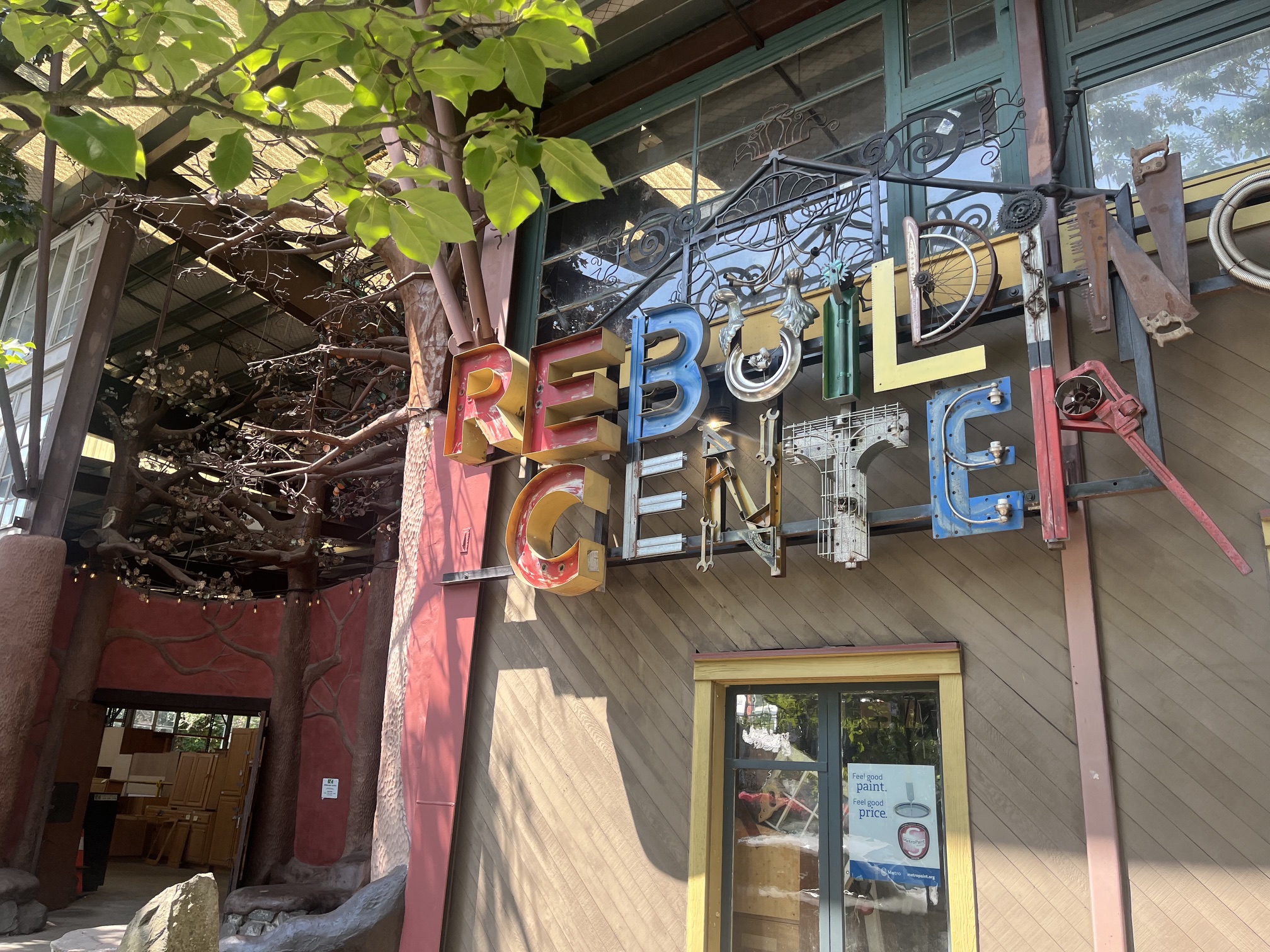
ReBuilding Center hosted Reimagining & Repurposing, where a longtime Portland craftsman walked us through the cleaning, repair, and restoration that makes reuse possible. I love picking scrapyards and finding deals at thrift shops, keeping what we already have out of the landfill a while longer. It might be the least glamorous corner of the circular economy and the most useful one. My friend Celine Mol helped build Beni, a browser extension that searches 300 million secondhand listings to make resale the obvious choice, so maybe there is a way to point tech at exactly this. And even if it stays fully local and organic, hands sorting salvage instead of a keyboard, that is still something I could see myself doing. Not everything has to be about software.
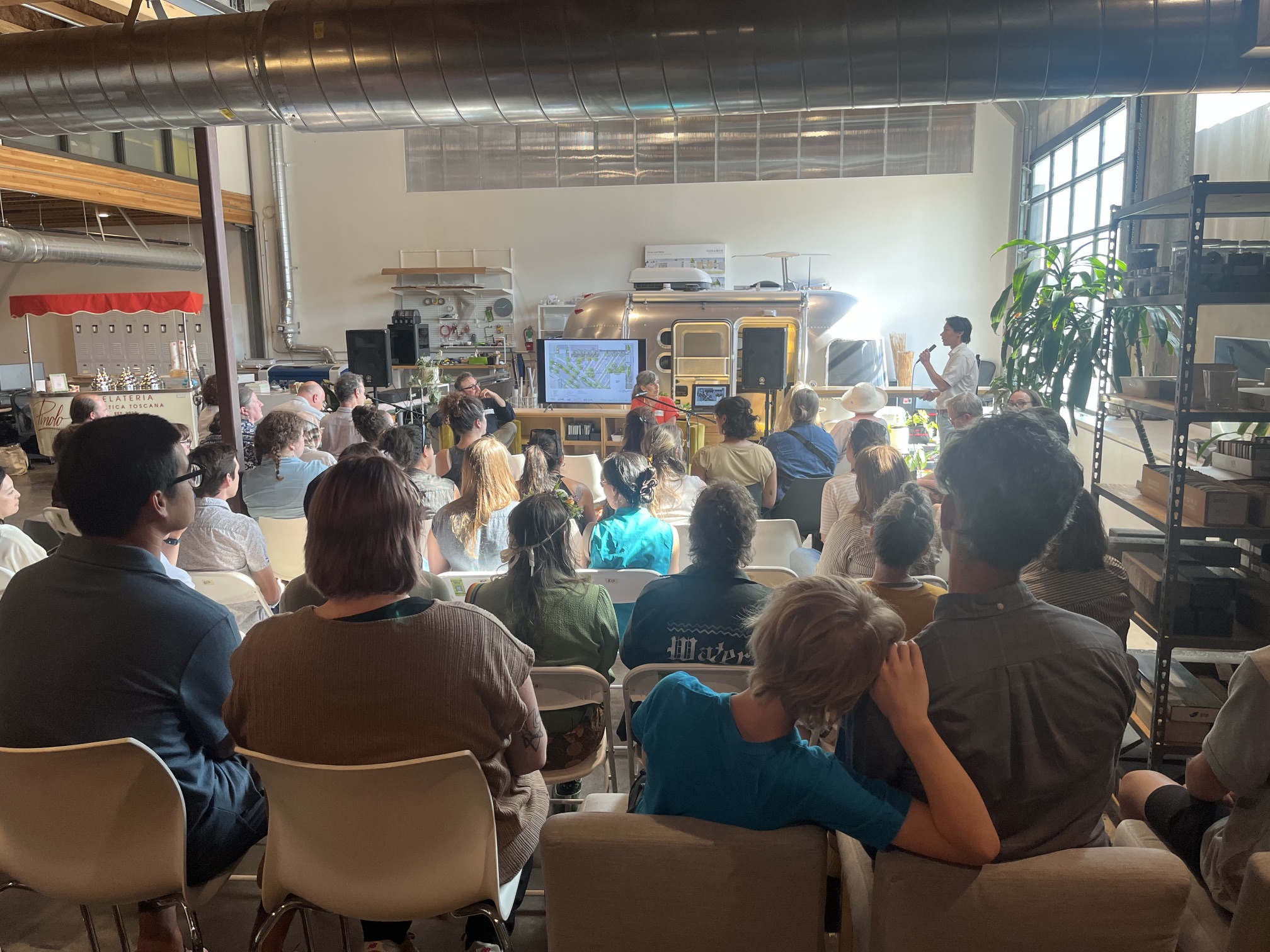
I also attended a fireside chat with Depave at the Glass Lab, hosted by Knot Studio. Since 2008 Depave has been tearing out pavement nobody needed and putting living, permeable ground back in its place. They walked us through GIS analysis of tree cover that surfaced the hottest parts of the city, which is how they find the neighborhoods that need shade most. It is permaculture at city scale.
Depave mentioned a possible collaboration with the PSU Oak Savanna, an urban restoration site where students have been planting white oak, camas, and serviceberry to bring back native plants and traditional Indigenous practices. I met Brittany Gadbury from Portland Parks & Rec’s Urban Forestry team, who pointed me toward the Portland Placemaking Coalition and Trees for Life Oregon, both of which I am excited to learn more about.
This is just a tiny fraction of events throughout the entire week across seven cities, from Vancouver, BC to Bend. Even that small sample blew me away with the scale and diversity of the community. I met a wide variety of participants, from professors and craftsmen to executive directors and urban foresters. I came in wondering where I might fit, and the event kept answering in more forms than I expected: solar arrays, battery storage, a VR headset, data centers, GIS maps finding the blocks that need shade, community gardens, a workshop full of salvaged wood. Software is vital for the health of our planet, and I would love to see more engineers out there. But so much of the work runs far wider than code, and a life of service can take any of those shapes. Wherever my own path leads, I left certain there is room for all of us. Let’s co-create a deeper connection between our work and climate action in 2027!